Capsules labeled NAD+ are easy to find. The pitch is tidy: swallow the molecule your cells use for energy, and you have topped off the tank. The chemistry is less tidy. NAD+ is large and charged, and the gut is built to take molecules like that apart.
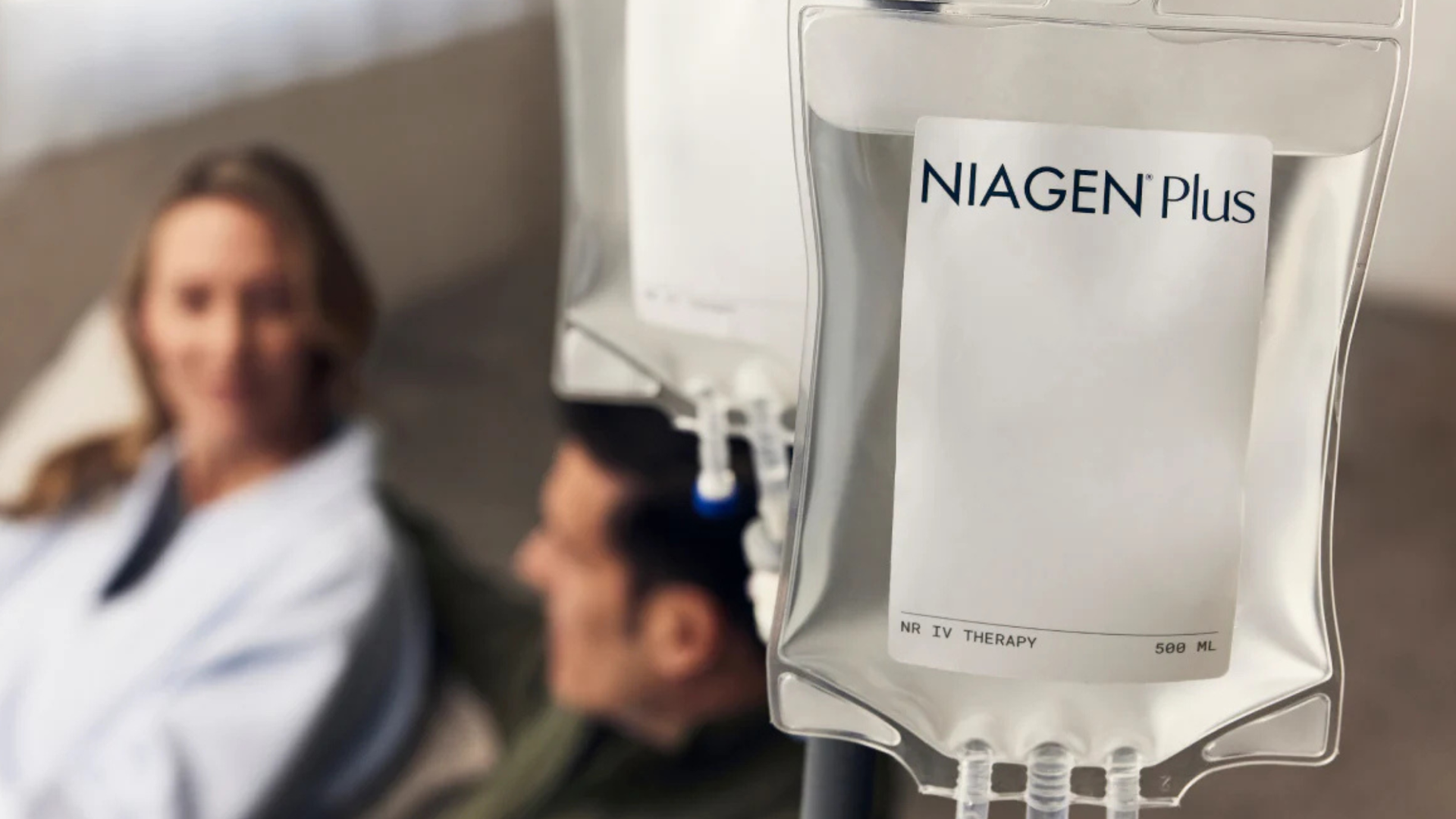
Niagen® is a different starting point. It is nicotinamide riboside, or NR, a smaller precursor. Cells can take NR in and build NAD+ on the inside. An injection is one way to offer that precursor without sending it through the stomach and intestine first. This is the plain version of why that route makes sense, and where the research stops.
Quick take
- Oral NAD+ is mostly broken into smaller pieces. Most of what is absorbed is not intact NAD+.
- Intestinal enzymes clip NAD+ into NMN, NR, and nicotinamide. Stomach acid is a clearer problem for NADH, the reduced form, than for NAD+ itself.
- What does get absorbed still meets the liver. For oral NR, only a small share is absorbed directly. Gut microbes rework a lot of it.
- Intact NAD+ does not easily cross the fatty membrane of a cell, and most cells have no dedicated importer for it.
- Niagen is a precursor cells can use. An injection skips the digestive hurdles. It has not been proven better than a capsule in a head-to-head human trial.
NAD+ in one minute
NAD+ (nicotinamide adenine dinucleotide) is a coenzyme in every cell. It carries electrons in the reactions that let cells turn food into usable energy, including the work mitochondria do. It is also used by enzymes involved in cellular maintenance. Reviews from several labs describe NAD+ levels as tending to fall with age in animals and in people [5, 11, 12]. If you want the longer intro, start with what NAD+ is. Supporting a level that falls with age is a reasonable idea. It is not the same as turning the clock back.
Why an oral NAD+ capsule falls short
1. Digestion starts before the intestine
A 2024 review describes the NAD-related dinucleotides in food as being broken down by the body, beginning in the acid environment of the stomach. Most of what is absorbed arrives as smaller pieces, especially nicotinamide or nicotinic acid, not as intact NAD+ [1].
You will sometimes read that stomach acid shreds NAD+ into nicotinamide. A mouse study found a narrower fact. NADH, the reduced form, fell apart within minutes in acid meant to mimic the stomach. NAD+ itself held up in that test. Swallowed NAD+ still showed up in urine as the same nicotinamide-related metabolites as swallowed nicotinamide, so the dose was processed into smaller pieces. Acid alone was not the scissors [2].
2. Intestinal enzymes finish the cut
Classic experiments on rat intestine found two enzyme paths at the brush border, the surface that faces the food. One clips the pyrophosphate bond in NAD+ and releases NMN. That NMN is then dephosphorylated into NR. A second path releases nicotinamide directly. At a mildly acidic pH, nicotinamide was the main product [3]. That is rat intestine, not a human capsule trial, and it is still the clearest map we have.
3. The liver sees it before the rest of you
Anything absorbed from the gut goes to the liver first. That first pass matters. In mice, only a small portion of an oral dose of NR or the related precursor NMN was absorbed directly from the small intestine. Most of it was converted by gut microbes into nicotinic acid, which the liver then used to make NAD+ [4]. A 2024 review reaches a similar conclusion for an oral bolus of nicotinamide, NR, or NMN [1]. Those microbe studies are mostly in mice, so this is a direction, not a percentage to print on a capsule label.
4. Intact NAD+ does not slip into cells
NAD+ that reaches the blood still has to enter a cell. It is large and charged, and charged nucleotides do not drift across a fatty membrane. NAD+ is not considered cell-permeable [1, 5]. Bloodstream is not the inside of the cell.
5. Most cells have no door for intact NAD+
With the exception of neurons, mammalian cells cannot import NAD+, so they build it inside [6]. Connexin 43 can move NAD+, but the gradient is thought to favor export, not a delivery route in. A proposed NMN transporter in the intestine is still debated, and it is not a door for intact NAD+ [1]. Cells generally take up smaller precursors instead. NR can enter through nucleoside transporters and be rebuilt into NAD+ on the inside [1, 7].
Why Niagen, and why an injection
Niagen is the NR used in several human trials, and oral NR raises blood NAD+. Single doses from 100 to 1,000 mg raised the blood NAD+ metabolome in a dose-dependent way [8]. Six weeks at 1,000 mg a day in adults 55 to 79 was well tolerated and lifted NAD+ in one blood-cell type by about 60% versus placebo [9]. A smaller open-label study, eight people and no placebo group, saw whole-blood NAD+ roughly double at 1,000 mg twice a day [10].
An injection skips the stomach and the intestinal enzymes. It does not enlarge those oral results. NR is still a precursor cells can use [1, 6, 7], and we found no head-to-head human trial of injected Niagen versus a capsule. In mice, intravenous NR was quickly broken down to nicotinamide [4]. Skipping the gut is a real difference in route. It is not proof of a higher NAD+ level, and it is not a promise about how you will feel. Those oral trials used about 1,000 mg a day. A 50 mg injection is a different dose, and no published study converts one into the other.
Oral NAD+ and a Niagen injection, side by side
| Question | Oral NAD+ | Niagen injection |
|---|---|---|
| What you take | The finished NAD+ molecule | Niagen, a branded form of NR, which is a precursor |
| Digestion | Broken into smaller pieces before absorption | Skips the stomach and intestinal wall |
| Getting into cells | Intact NAD+ does not easily cross cell membranes | NR is a smaller precursor cells can take up and rebuild |
| What people studies show | Little evidence that intact oral NAD+ arrives as NAD+ | Oral NR can raise blood NAD+. Injected NR has not been compared head-to-head |
What the research suggests, carefully
People ask about NAD+ for a handful of reasons. Each note below is a “may,” tied to a paper. For the longer trial review, see does NAD+ actually work and Niagen after 50.
Healthy NAD+ levels that decline with age
This is the strongest finding. Reviews report that tissue NAD+ tends to fall with age, and older human skin has shown lower NAD+ than younger skin [5, 11, 13]. Oral NR can raise the lab number, as the trials above did [9]. That is not proof you will feel younger.
Cellular energy and mitochondria
NAD+ is required for glycolysis, the citric-acid cycle, and mitochondrial electron transport. A cell has no lasting way to make ATP that skips the NAD+/NADH handoff [1, 12]. Raising NAD+ may support that chemistry. Mitochondrial function did not change in a three-week trial in aged muscle [14].
Healthy aging and metabolic support
NAD+ sits in the middle of fuel metabolism, and animal studies of NAD-boosting molecules have reported metabolic effects [5, 6]. Human translation is unfinished. “May support” is as far as the evidence goes.
Muscle, training, and recovery
In 12 men ages 70 to 80, 1,000 mg of oral NR a day for 21 days raised NAD-related metabolites in muscle and was linked with lower levels of some inflammatory signals in the blood. Muscle NAD+ itself did not rise significantly, and grip strength and mitochondrial function did not change [14]. In healthy adults 55 to 79, NR also did not improve aerobic capacity or motor function in any obvious way [9]. Reaching muscle is not the same as a faster recovery.
Focus and clarity
Neurons depend on NAD+ for energy metabolism, which is why brain-aging research pays attention [12]. A 10-week pilot in older adults with mild cognitive impairment found NR was tolerated and raised blood NAD+, and cognitive scores stayed stable [15]. We do not describe Niagen as a treatment for brain fog or memory loss.
Sleep
We did not find a placebo-controlled trial in healthy adults showing that NR improves sleep, so this page does not claim it. If sleep is the main goal, say so. Schedule and caffeine come before an injection.
What a visit at our clinic actually is
At Prime IV Hydration & Wellness in Jones Valley, a Niagen injection is a short visit, not a lounge infusion. Licensed staff screen your history, medications, and goals first. Doses are on our NAD+ and Niagen page and the menu. A series is optional. Niagen may support cellular energy and healthy aging alongside sleep, food, and strength work. It does not replace them, and it does not treat disease.
Frequently Asked Questions
Is Niagen the same thing as NAD+?
No. Niagen is nicotinamide riboside (NR), a precursor cells use to make NAD+. An NAD+ infusion is the finished molecule.
Is a Niagen injection proven better than a capsule?
No. An injection bypasses digestion. We did not find a head-to-head human trial showing it raises NAD+ more than oral NR or an oral NAD+ supplement.
Will this reverse aging, sharpen focus, or fix sleep?
No. NR may support healthy NAD+ levels. It is not a treatment for aging, memory loss, or sleep. A small trial in older adults with mild cognitive impairment raised NAD+ and did not change cognitive scores.
What is the November 2026 special?
For the November 2026 special, a 50mg Niagen injection is $85 through November 30, 2026. Call (256) 678-0033 to book. The regular single price is $150. Multi-injection packs are available at an even better deal. Ask the team.
Sources
- Migaud ME, Ziegler M, Baur JA. “Regulation of and challenges in targeting NAD+ metabolism.” Nature Reviews Molecular Cell Biology. 2024;25(10):822–840. PubMed 39026037
- Kimura N, Fukuwatari T, Sasaki R, Shibata K. “Comparison of metabolic fates of nicotinamide, NAD+ and NADH administered orally and intraperitoneally; characterization of oral NADH.” Journal of Nutritional Science and Vitaminology. 2006;52(2):142–148. PubMed 16802695
- Baum CL, Selhub J, Rosenberg IH. “The hydrolysis of nicotinamide adenine nucleotide by brush border membranes of rat intestine.” Biochemical Journal. 1982;204(1):203–207. PubMed 7115322
- Yaku K, Palikhe S, Iqbal T, et al. “Nicotinamide riboside and nicotinamide mononucleotide facilitate NAD+ synthesis via enterohepatic circulation.” Science Advances. 2025;11(12):eadr1538. PubMed 40117359
- Covarrubias AJ, Perrone R, Grozio A, Verdin E. “NAD+ metabolism and its roles in cellular processes during ageing.” Nature Reviews Molecular Cell Biology. 2021;22(2):119–141. PubMed 33353981
- Rajman L, Chwalek K, Sinclair DA. “Therapeutic potential of NAD-boosting molecules: the in vivo evidence.” Cell Metabolism. 2018;27(3):529–547. PubMed 29514064
- Yoshino J, Baur JA, Imai SI. “NAD+ intermediates: the biology and therapeutic potential of NMN and NR.” Cell Metabolism. 2018;27(3):513–528. PubMed 29249689
- Trammell SAJ, Schmidt MS, Weidemann BJ, et al. “Nicotinamide riboside is uniquely and orally bioavailable in mice and humans.” Nature Communications. 2016;7:12948. PubMed 27721479
- Martens CR, Denman BA, Mazzo MR, et al. “Chronic nicotinamide riboside supplementation is well-tolerated and elevates NAD+ in healthy middle-aged and older adults.” Nature Communications. 2018;9:1286. PubMed 29599478
- Airhart SE, Shireman LM, Risler LJ, et al. “An open-label, non-randomized study of the pharmacokinetics of the nutritional supplement nicotinamide riboside (NR) and its effects on blood NAD+ levels in healthy volunteers.” PLoS One. 2017;12(12):e0186459. PubMed 29211728
- Katsyuba E, Romani M, Hofer D, Auwerx J. “NAD+ homeostasis in health and disease.” Nature Metabolism. 2020;2(1):9–31. PubMed 32694684
- Verdin E. “NAD+ in aging, metabolism, and neurodegeneration.” Science. 2015;350(6265):1208–1213. PubMed 26785480
- Massudi H, Grant R, Braidy N, et al. “Age-associated changes in oxidative stress and NAD+ metabolism in human tissue.” PLoS One. 2012;7(7):e42357. PubMed 22848760
- Elhassan YS, Kluckova K, Fletcher RS, et al. “Nicotinamide riboside augments the aged human skeletal muscle NAD+ metabolome and induces transcriptomic and anti-inflammatory signatures.” Cell Reports. 2019;28(7):1717–1728.e6. PubMed 31412242
- Orr ME, Kotkowski E, Ramirez P, et al. “A randomized placebo-controlled trial of nicotinamide riboside in older adults with mild cognitive impairment.” GeroScience. 2024;46(1):665–682. PubMed 37994989
These statements have not been evaluated by the FDA. This content is for education, not medical advice. Talk with our team or your provider about what's right for you. Niagen® is a registered trademark of Niagen Bioscience. Injections at Prime IV Hydration & Wellness are not intended to diagnose, treat, cure, or prevent any disease, and they do not reverse aging. Results vary.